Student side jobs.
Students in Swiss cities earn CHF 25–35 an hour. No hour limit for Swiss and EU/EFTA students, 15 hours a week for students from other countries, AHV from the year after you turn 17, accident cover in your own health insurance. Six jobs that fit a timetable, and a quick check.
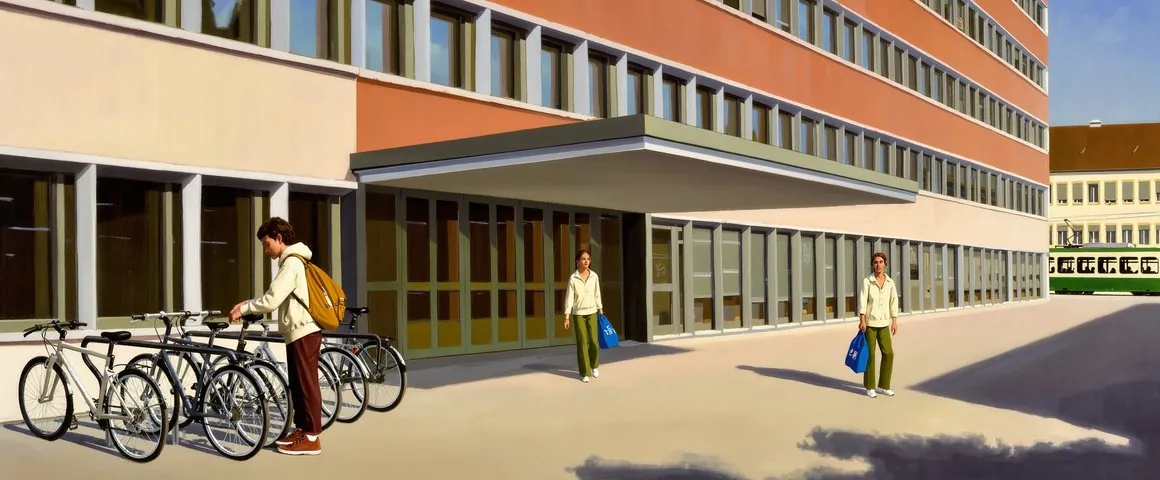
Students may work. The only hard limit is for students from outside Europe: 15 hours a week.
Swiss students earn CHF 25–35 an hour in the big cities, and the rules are short: no limit for Swiss and EU/EFTA students, 15 hours a week for the others, AHV from the year after you turn 17, accident cover in your own health insurance, and yes — taxes too. The rest is finding a job that fits a timetable.
- Check your permit line.Swiss or EU/EFTA passport: no limit. Study permit from another country: 15 h a week, after six months.
- Pick a job that fits lectures.Tutoring, assistant posts, evenings in hospitality, tasks for households at the weekend.
- Keep it under ten hours.Eight to ten hours a week is what grades survive. Exam weeks off.
- Let AHV and tax happen.The employer deducts AHV; you declare the income in spring. Both are small at student level.
The rate, the limit, the minimum.
Where students actually earn.
Passport, age, hours, rate.
Six things every working student should know.
- Permit: the 15-hour ruleSwiss and EU/EFTA students: work as much as your studies allow. Students from other countries with a study permit: at most 15 hours a week during the semester, full-time in the holidays with the school’s consent, and only from the seventh month after the studies start. The employer applies for the permit. [1] [3]
- Accidents: tick the box in your health insuranceA student job under 8 hours a week insures you only at work. For the bike, the ski slope and the party, accident cover must be switched on in your health insurance — it is cheap, and it is your responsibility. [9]
- Taxes: yes, students pay tooThere is no student allowance. Income goes in your tax return (or your parents’, while you are a dependant in some cantons) — but at student income levels the tax is small, and the flat 20 % deduction applies. [10]
- Hours: your timetable is the real limitEight to ten hours a week is what most students manage without grades suffering. Put the job in the evenings and one weekend day, keep exam weeks free, and tell the client in advance.
- Scholarships: check the income lineCantonal grants (Stipendien) have income limits — a side job above them reduces the grant. Ask your Stipendienstelle for the figure before you take a bigger job.
Permits in detail: Permits B, C, L, G: who may work on the side. Money after AHV and tax: How much you can really earn.
Short answers.
How many hours may a student work in Switzerland?
Swiss and EU/EFTA students: no legal limit — your studies set it. Students from other countries with a study permit: at most 15 hours a week during the semester, full-time in the holidays with the school’s consent, and only after the first six months.
What do students earn per hour?
CHF 22–35 depending on region: around CHF 25–35 in Zürich, Basel and Geneva, CHF 22–30 elsewhere in German-speaking Switzerland, CHF 18–22 in Ticino. Tutoring pays CHF 25–40 a lesson; university assistant posts about CHF 30 an hour.
Do students pay AHV?
Yes, on wages from 1 January after their 17th birthday, deducted by the employer (unless the job pays under CHF 2 500 a year). From the year after turning 20 a student must pay at least CHF 530 a year even without a job — a job that pays AHV covers it.
Do students pay tax on a side job?
Yes — there is no student exemption. At typical student incomes the tax is small, and the flat 20 % side-job deduction applies.
Which student job is best?
Tutoring and university assistant posts pay well and fit the timetable; tasks for households (moving, garden, computer help) pay CHF 25–45 an hour with flexible hours; hospitality fills evenings. Keep it to 8–10 hours a week during the semester.

Every task. One app.
Werkara connects people who need help around the house with verified taskers nearby. Register in a few minutes and get your first task this week.
Become a taskerWhere the rules come from.
- [1]Canton of Lucerne, migration office — Merkblatt Studierende aus Drittstaaten — side jobs after 6 months, at most 15 hours a week during the semester, full-time in the holidays with the school’s written consent. migration.lu.ch
- [2]Swiss Confederation — Ordinance VZAE, Art. 38 — gainful employment of foreign students. www.fedlex.admin.ch
- [3]Canton of Zürich — Studierende und Praktikanten — work permits for foreign students, no quota. www.zh.ch
- [4]Lohncheck — Student hourly rates — CHF 22–35; Zürich, Basel and Geneva CHF 25–35. lohncheck.ch
- [5]Nachhilfe-Vergleich Schweiz — Kosten Nachhilfe — student tutors CHF 25–40 a lesson. nachhilfe-vergleich-schweiz.ch
- [6]AHV/IV information centre — Merkblatt 2.01 — AHV contributions on wages from 1 January after the 17th birthday; CHF 2 500 small-wage line (2026). www.ahv-iv.ch
- [7]AHV/IV information centre — Merkblatt 2.03 — contributions of non-working people: students from 1 January after the 20th birthday pay at least CHF 530 a year unless they work. www.ahv-iv.ch
- [8]AHV/IV information centre — Merkblatt 2.06 — household jobs: under-25s earning up to CHF 750 a year per household are exempt. www.ahv-iv.ch
- [9]Suva — BU/NBU — under 8 hours a week with one employer, accident cover must be in your health insurance. www.suva.ch
- [10]Federal Tax Administration (ESTV) — Berufskosten bei Nebenerwerb — flat 20 % deduction. www.estv2.admin.ch
- [11]University of Zürich — Lohnreglement 2026 — pay scale for student assistants. www.staff.uzh.ch