Side income and taxes.
There is no tax-free allowance for side jobs in Switzerland: every franc goes in the tax return and is taxed on top of your salary. Here is what that means in francs, what you may deduct, the 5 % exception for household jobs, and a calculator for your canton.
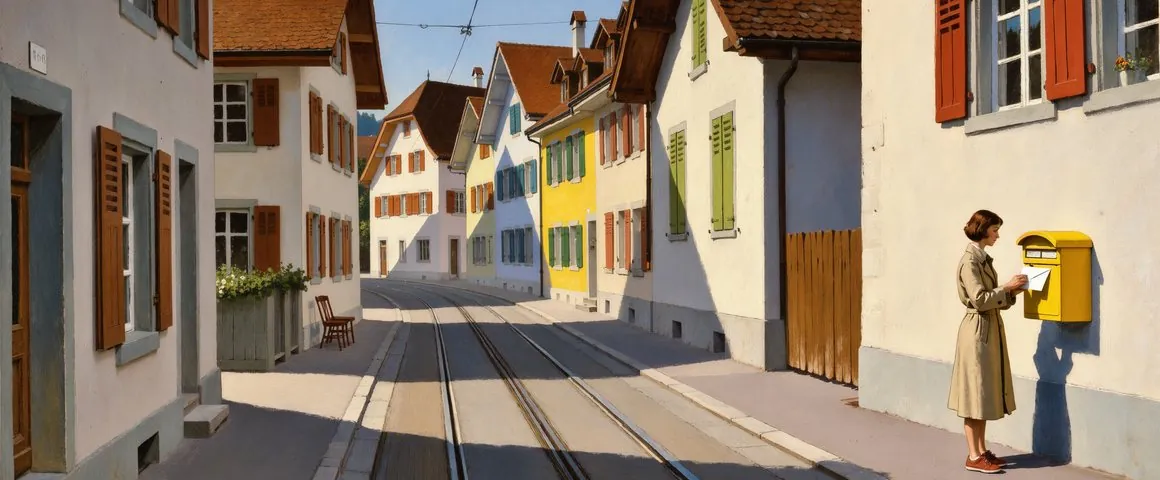
Everything you earn is taxed. A side job too — from the first franc.
Switzerland has no tax-free allowance for small jobs. What makes side income feel special is only this: it comes on top of your salary, so it is taxed at the highest rate you pay. The good news: the paperwork is one line in the tax return, and part of the money comes off first.
- You earn on the side.A second payslip, invoices to clients, or a wage from a family.
- In spring you fill in one more line.The side income goes in your tax return next to your salary. Receipts are not sent — only kept.
- Costs and AHV come off.A flat 20 % (CHF 800–2 400) for an employed side job, real costs if you work for yourself, plus any AHV you paid.
- The rest is taxed with your salary.Roughly one franc in four for a middle earner. The calculator below shows your number.
The one exception
A family that pays you through the simplified procedure (vereinfachtes Abrechnungsverfahren) deducts a flat 5 % tax together with AHV. That wage is then finished — it does not go in your return at all. [3]
Seven figures that cover almost every case.
Who pays you decides what you write down.
Whether AHV is deducted at all is explained in The CHF 2 500 AHV rule, explained; which jobs count as employed or self-employed in Side jobs in Switzerland: what is allowed.
Seven things worth knowing before the tax return.
- It is taxed “on top”Swiss income tax climbs with income. Your side income is added to your salary and taxed at the rate that applies to your last francs — the highest rate you pay. CHF 5 000 extra for a middle earner in Zürich costs roughly CHF 1 300. [9]
- Costs come off firstEmployed side job: a flat 20 % (CHF 800–2 400) without receipts, or real costs with receipts. Self-employed: all real costs — tools, materials, travel to clients, work clothing, insurance for the activity, a share of phone and laptop. No receipt, no deduction. Basel-Stadt gives a flat CHF 4 000, Ticino CHF 800, Schwyz nothing. [2]
- A loss every year is a hobbySelf-employed side work must aim at a profit. If it makes a loss year after year, the tax office treats it as a hobby: the income still counts, but the losses can no longer be set against your salary. [1]
- AHV comes off tooContributions you paid are not income. On a payslip they are already deducted; as a self-employed person you deduct what you paid the Ausgleichskasse. Only the net amount is taxed. [11]
- Selling your own stuff is not incomeYour old sofa on Ricardo, your bike on tutti: private, tax-free. Buying things to sell them again, regularly, is a business — taxable, and AHV may be due. [1]
- B, L or G permit: tax at source, twiceEach employer deducts tax at source from its own wage. Since 2021 the rate is set on your full workload, so tell each employer about the other job. Above CHF 120 000 a year you file an ordinary return; below it you may ask for one until 31 March of the following year — useful to claim deductions. Income from your own invoices is not taxed at source at all: report it to the cantonal tax office, which then normally assesses you with an ordinary return. [7]
Tax and AHV on your side income — an estimate for your canton.
Set your salary, your side income and how you are paid. The page estimates how much of the side income goes to the tax office and the Ausgleichskasse, and how much stays with you.
Tax is one envelope. Five more things to settle.
Working on the side touches more than the tax return. Here is the short version of each, and the article that explains it in full.
- AHV on your own invoicesSelf-employed people pay AHV/IV/EO alone: 10.0 % from CHF 60 500 a year, less on a declining scale below that (from 5.371 %), at least CHF 530 a year. Beside a job, a profit up to CHF 2 500 a year is AHV-free unless you ask. Register with the Ausgleichskasse of your canton before the first larger amounts arrive. [14] More in The CHF 2 500 AHV rule and Registering with the Ausgleichskasse.
- Employed or self-employed?You do not choose — the Ausgleichskasse decides, from your own invoices, your own risk, several clients, free organisation and your own tools. Employed or self-employed?
- InsuranceSelf-employed income brings no unemployment insurance and no compulsory pension fund. Accident cover comes from your employer only if you work there 8 hours a week or more; private liability often excludes paid work. Insurance for side work
- Your employer and your hoursA side job is allowed if it does not harm your employer (duty of loyalty, Art. 321a CO); many contracts ask you to tell them. The 45- or 50-hour weekly maximum counts across all jobs, and paid work that spoils your holiday is not allowed. Side jobs: what is allowed · Working hours and holidays
- Permits and licencesWith a B or L permit from outside the EU/EFTA, self-employed work needs approval from the migration office first. Electrical, gas and heating work, passenger transport and larger-scale childcare need a licence even on the side. Permits B, C, L, G · Which side jobs need a licence
Studying? The same tax and AHV rules apply — watch the cantonal income limits for grants and premium reductions in Student side jobs. Ready to start properly? Becoming self-employed in 7 steps.
Short answers.
Do I have to declare a side income of CHF 800?
Yes. Switzerland has no tax-free allowance for small jobs — unlike the German Minijob. Every franc of income goes in the tax return (DBG Art. 16). The only wages that do not appear there are small household wages settled by the family through the simplified procedure, because the 5 % tax has already been paid.
How much tax do I pay on side income?
Your side income is added to your salary and taxed at your marginal rate — roughly 20 to 30 % for middle incomes, depending on canton and municipality. CHF 5 000 extra typically costs CHF 1 000 to 1 500 in tax. Use the calculator above for your canton.
What can I deduct from side income?
For an employed side job: a flat 20 % of the income, at least CHF 800 and at most CHF 2 400 a year, without receipts (more with receipts). For self-employed side income: all real business costs. Basel-Stadt, Ticino and Schwyz have their own rules.
Do I need to charge VAT on my invoices?
Not unless your turnover reaches CHF 100 000 a year. Below that you simply write invoices without VAT.
I have a B permit and pay tax at source. What about my second job?
The second employer also deducts tax at source. Since 2021 the rate is based on your total workload, so inform both employers. Above CHF 120 000 a year you must file a tax return; below it you may request one (nachträgliche ordentliche Veranlagung) by 31 March of the next year.
I pay tax at source and also invoice my own clients. What do I do?
Tax at source only covers wages. Income from your own invoices is not captured, so report it to the cantonal tax office yourself. This normally leads to an ordinary assessment with a full tax return, where you can also claim your costs.
Do I also pay AHV on my side income?
On a payslip, AHV is deducted by the employer (none under CHF 2 500 a year per employer, unless you ask). On your own invoices you register with the Ausgleichskasse: beside a job, a profit up to CHF 2 500 a year is AHV-free unless you ask; above it you pay 5.371 % to 10.0 %, at least CHF 530 a year. Paid AHV is deducted before tax.
Do I need a company or a commercial-register entry?
No. You are a sole proprietor as soon as you work in your own name and on your own account. The commercial-register entry and VAT become compulsory only from CHF 100 000 turnover a year.
Is selling my old things on Ricardo taxable?
No. Selling your own used belongings is a private matter. Buying goods to resell them regularly and for profit is a business and is taxable.

Every task. One app.
Werkara connects people who need help around the house with verified taskers nearby. Register in a few minutes and get your first task this week.
Become a taskerWhere the rules come from.
- [1]Swiss Confederation — Federal Direct Tax Act (DBG), Art. 16–18 — all income is taxable: employment, self-employment, one-off earnings. www.fedlex.admin.ch
- [2]Federal Tax Administration (ESTV) — Berufskosten bei Nebenerwerb (Stand 26.11.2025) — flat deduction 20 %, min. CHF 800, max. CHF 2 400; cantonal deviations (BS CHF 4 000, TI CHF 800, SZ none). www.estv2.admin.ch
- [3]SECO — State Secretariat for Economic Affairs — Vereinfachtes Abrechnungsverfahren — 5 % flat tax on small wages, limits CHF 22 680 per employee and CHF 60 480 per employer (2025 figures, unchanged for 2026). www.seco.admin.ch
- [4]Federal Tax Administration (ESTV) — MWST-Steuerpflicht — VAT registration only from CHF 100 000 turnover a year. www.estv.admin.ch
- [5]Federal Tax Administration (ESTV) — Swiss tax calculator — income tax by canton and municipality (2026 figures used for the estimate on this page). swisstaxcalculator.estv.admin.ch
- [6]Canton of Zürich, tax office — Straflose Selbstanzeige — back tax for up to 10 years, fine of one third to three times the tax evaded; first voluntary disclosure penalty-free. www.zh.ch
- [7]Federal Tax Administration (ESTV) — Besteuerung an der Quelle — tax at source for B/L/G permit holders; ordinary assessment above CHF 120 000 or on request. www.estv.admin.ch
- [8]Canton of Bern, tax office — Wegleitung — Berufskosten Nebenerwerb (cantonal practice follows the federal flat rate). www.wegleitung.sv.fin.be.ch
- [9]Zürcher Kantonalbank — Grenzsteuersatz — a single person in the city of Zürich with CHF 90 000 taxable income pays about 26 % on every extra franc. www.zkb.ch
- [10]Swiss Confederation — Code of Obligations (OR), Art. 957 — simplified bookkeeping (income, expenses, assets) under CHF 500 000 turnover. www.fedlex.admin.ch
- [11]AHV/IV information centre — Merkblatt 2.01 / 2.02 — AHV on small wages and on self-employed side income (2026). www.ahv-iv.ch
- [12]Swiss Confederation — Federal Direct Tax Act (DBG), Art. 152 (back tax up to 10 years) and Art. 175 (fine one third to three times the tax; first voluntary disclosure penalty-free) — the same rules apply in every canton through the Tax Harmonisation Act (StHG Art. 53, 56). www.fedlex.admin.ch
- [13]ch.ch — Swiss Confederation — Self-employment — sole proprietorship, commercial-register entry from CHF 100 000 turnover a year. www.ch.ch
- [14]AHV/IV information centre — Memorandum 2.02, Contributions of the self-employed (1 January 2026) — 10.0 % from CHF 60 500, declining scale from 5.371 %, minimum CHF 530, CHF 2 500 limit for secondary work. www.ahv-iv.ch